
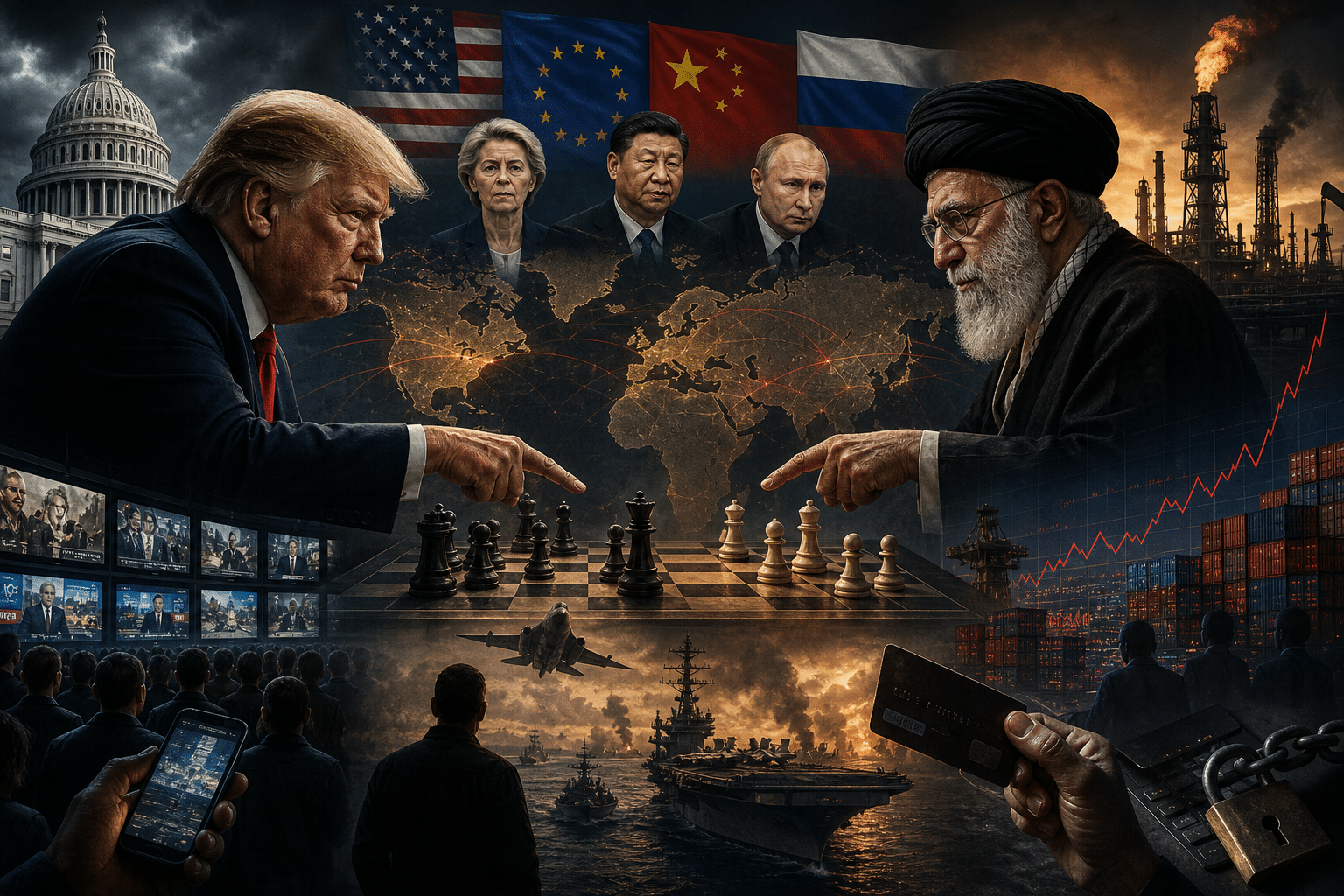
The Illusion of Choice: “Impossible War” or “Bad Deal”
Let’s cut through the diplomatic theater.
Iran’s message to the United States is blunt: pick your poison.
According to the IRGC, Trump now faces two paths—launch a military operation they claim is “impossible,” or accept a deal they frame as unfavorable to Washington. That’s not negotiation. That’s strategic cornering.
This is how high-stakes geopolitics really works. You don’t eliminate your opponent—you limit their options until every move benefits you.
And right now, the U.S. is being boxed in.
Ceasefire or Smokescreen? What’s Really Happening
On paper, there’s a ceasefire. No active exchange of fire. Sounds like progress, right?
Not so fast.
The administration is using that ceasefire as a legal loophole—arguing that since no shots are being fired, Congressional authorization for military engagement doesn’t apply. Translation: executive power expands quietly while the public is told everything is “under control.” In the broader narrative of No Deal with Iran, this framing reinforces the perception that official restraint masks deeper strategic maneuvering.
This isn’t de-escalation. It’s a pause with benefits—for those pulling the strings.
Meanwhile, the clock keeps ticking.
The 30-Day Pressure Window: A Manufactured Deadline
Iran’s latest proposal reportedly includes a 30-day timeline to end the conflict entirely.
That’s not diplomacy—it’s a pressure tactic.
Deadlines like this aren’t about peace. They’re about forcing rushed decisions under controlled conditions. When leaders are backed into a time-sensitive corner, outcomes tend to favor whoever set the clock.
And let’s be honest—these deals aren’t negotiated in a vacuum. They’re shaped by intelligence agencies, global alliances, and economic leverage points most people never see.
Global Alignment Is Shifting—And It’s Not in Washington’s Favor
One of the most telling details? Iran pointing out that Europe, China, and Russia are growing increasingly critical of U.S. actions.
That’s not just rhetoric—that’s a signal.
When multiple global powers start aligning against you diplomatically, your leverage shrinks fast. The “room for decision-making,” as Iran put it, narrows.
This is how superpowers get squeezed—not overnight, but through coordinated pressure, economic strain, and narrative control.
Economic Fallout: The Silent Weapon Hitting Americans First
While politicians posture, Americans are already feeling the impact.
Gas prices are rising. Supply chains tighten. Market uncertainty creeps in.
War—or even the threat of it—isn’t just fought with weapons. It’s fought through economics. Every escalation ripples through energy markets, inflation, and consumer costs.
And here’s the part they won’t say out loud: instability abroad is often leveraged to justify control measures at home.
The Media Narrative Machine Is Running Overtime
Mainstream coverage frames this as a simple standoff: Trump vs. Iran, deal vs. war.
That’s surface-level noise.
What’s missing is the pattern—the repeated use of crisis framing to steer public perception. Fear narrows focus. It simplifies complex situations into binary choices. It keeps people reactive instead of analytical.
And when people stop asking questions, power consolidates fast.
My Take: This Isn’t About War—It’s About Leverage
After decades in the trenches of tech, security, and watching how systems evolve behind the curtain, I’ll tell you this straight:
This isn’t just about Iran. It’s about control.
When options are artificially reduced, outcomes become predictable. When timelines are forced, decisions become rushed. When narratives are controlled, resistance fades.
This is how modern power operates—not through brute force alone, but through engineered constraints.
And right now, we’re watching it happen in real time.
The Bottom Line: Pay Attention to What Comes Next
Whether it ends in a deal or escalation doesn’t matter as much as people think.
What matters is what gets built, justified, and implemented in the aftermath.
Because every crisis leaves behind infrastructure—legal, economic, and technological—that rarely gets rolled back.
That’s the real story.
Final Warning: Don’t Wait Until It Hits Home
If you think this ends with foreign policy headlines, you’re not paying attention.
Moments like this are often used to accelerate deeper systemic changes—especially in how money, transactions, and financial access are controlled.
That’s why you need to get ahead of it.
Download the Digital Dollar Reset Guide by Bill Brocius right now. This isn’t optional reading—it’s critical intelligence for anyone who understands where this is heading.
It breaks down how systems like FedNow, emerging central bank digital currency frameworks, and expanding financial surveillance mechanisms are being positioned during times of global instability.
You’re either early—or you’re exposed.
Stay sharp. Stay skeptical. And don’t assume you’ll get a warning next time.