
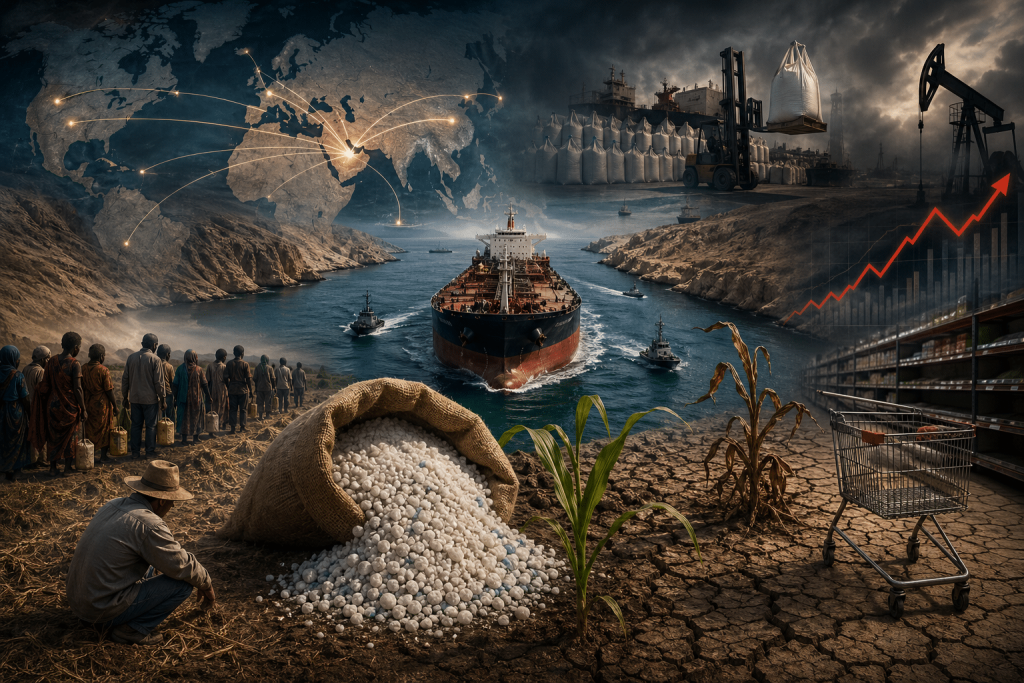
The Crisis No One Wants to Talk About Strip away the noise, and one fact stands out: the Strait of Hormuz is not just an energy corridor—it is a control valve on global food production. Roughly 40%+ of key fertilizer components have historically passed through that narrow stretch of water. That includes urea, ammonia, and sulphur—the chemical backbone of modern agriculture. Without them, global crop yields don’t decline gracefully. They fall off a cliff. And yet, the conversation remains stuck on oil. That’s not just an oversight. It’s a dangerous blind spot. Because while energy shocks hurt economies, food shocks destabilize societies. Fertilizer: The Invisible Infrastructure of Civilization Modern agriculture is a high-output machine built on chemical inputs. Nitrogen fertilizers…
This article is for Inner Circle members.
Inner Circle is the daily-private-newsletter, premium-archive tier from Bill Brocius. Sign up for a free Citizen account, or upgrade straight to Inner Circle.
30-day money-back guarantee.